
Belgrade is not a city that explains itself upfront. It doesn’t rely on charm or spectacle, and it doesn’t adapt its personality to be more digestible. Instead, Belgrade operates on continuity – of people, habits, and attitudes shaped by history, geography, and survival. It’s a city that assumes you’ll pay attention, that you’ll notice details, and that you’ll understand things gradually rather than immediately. That expectation alone sets it apart.
The capital of Serbia is located at the confluence of the Sava and Danube rivers and it has always been strategically important, and that importance has left visible marks. Empires, wars, political systems, and economic shifts have passed through, often violently, rarely cleanly. What remains is not a polished result, but a functioning one – a city that learned how to live with complexity instead of trying to erase it.
Architecture: Layers of Function, Power, and Adaptation
Architecture in Belgrade is best understood as accumulation rather than design. Austro-Hungarian buildings from the late 19th and early 20th centuries coexist with socialist-era housing blocks, post-war reconstruction, and modern glass structures still negotiating their legitimacy. There is no single skyline and no dominant style. Instead, the city reflects different moments of authority, necessity, and ideology.
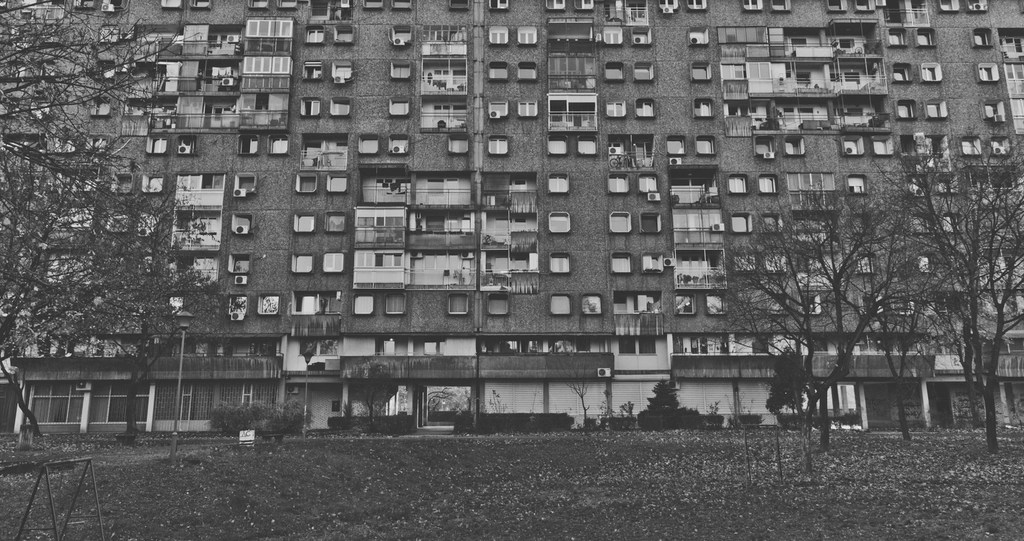
Brutalism, especially in New Belgrade, is not an aesthetic choice but a historical outcome. These large concrete structures were built quickly, at scale, and with purpose. They still serve that purpose today. In older neighborhoods, buildings are often maintained rather than restored, patched instead of replaced. This creates a visual honesty – nothing feels over-designed, but everything feels used. Belgrade’s architecture doesn’t ask to be admired; it asks to be understood.
Belgrade Waterfront: Power, Ambition, and Contested Space
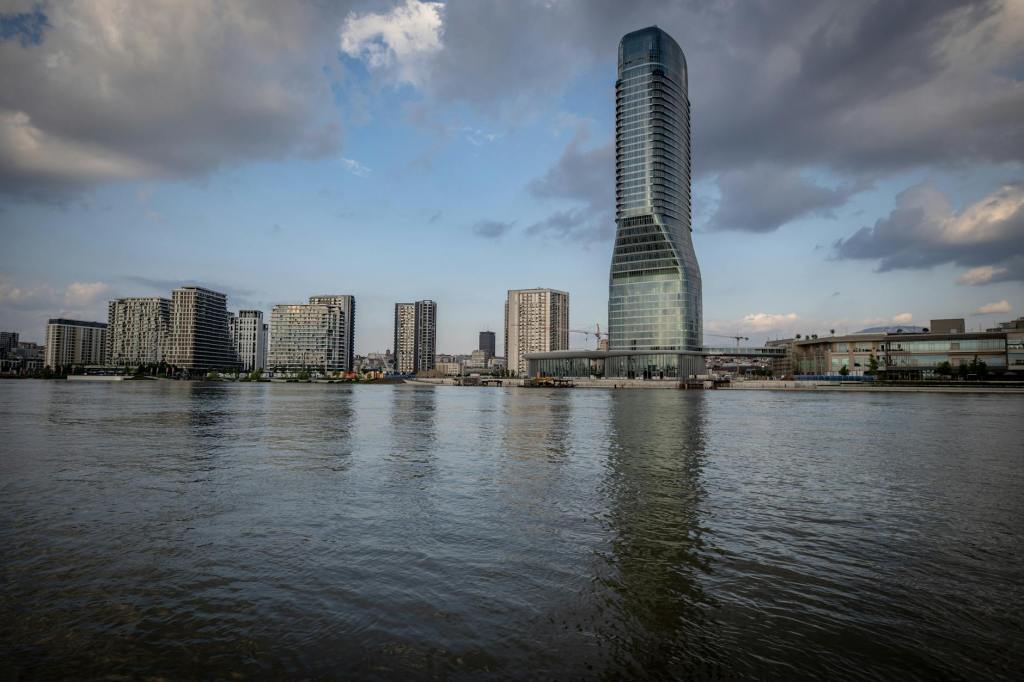
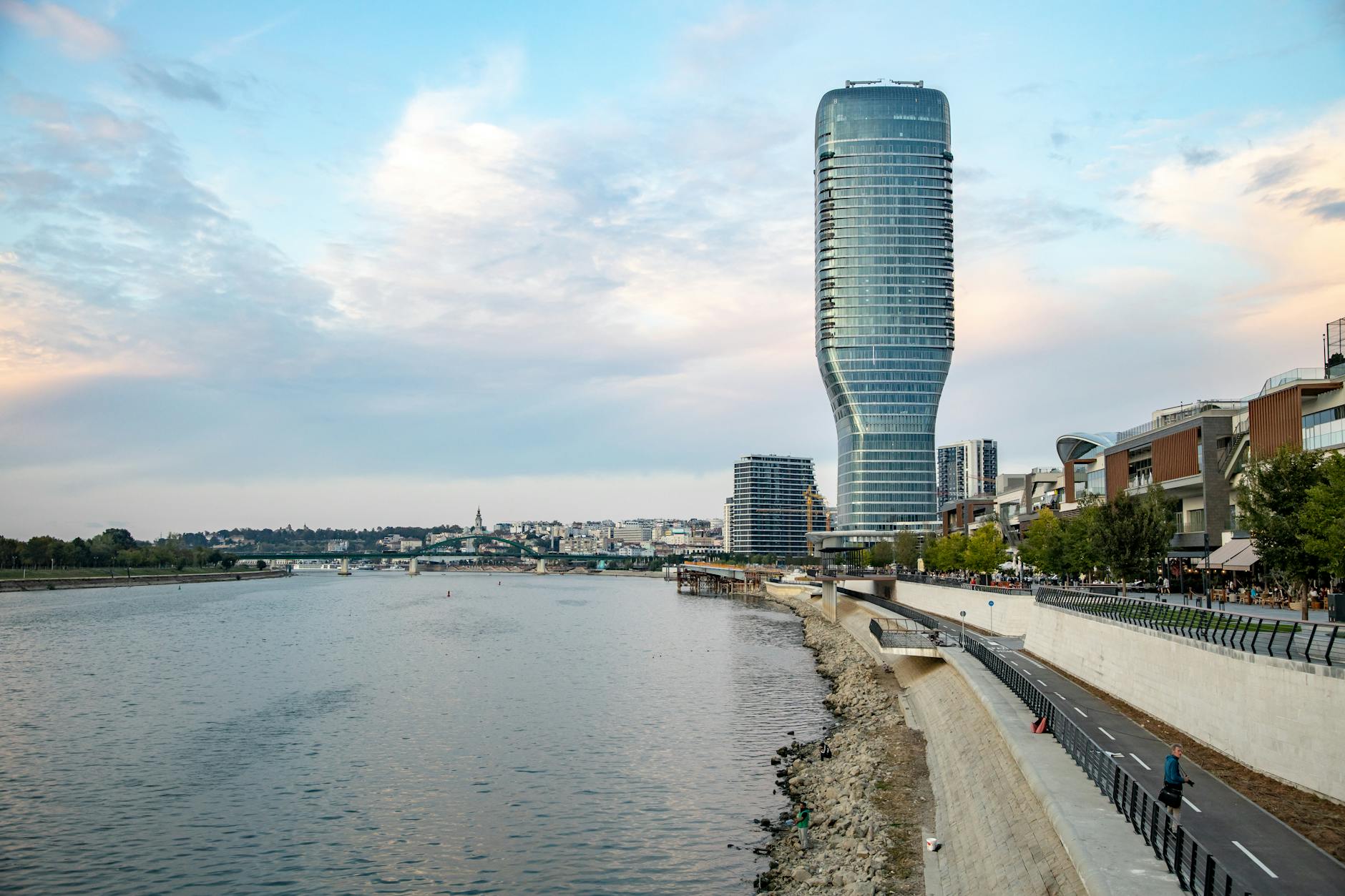
Belgrade Waterfront represents one of the most visible and debated shifts in the city’s recent history. Built along the Sava River, this large-scale development introduces a different architectural language to Belgrade — vertical, polished, and clearly aligned with global urban trends. Glass towers, wide promenades, and curated public spaces stand in sharp contrast to the surrounding city fabric.
For some, Belgrade Waterfront signals progress, economic confidence, and international visibility. It brings investment, modern housing, and a new relationship with the river. For others, it raises questions about transparency, public space, identity, and whose version of the city is being built. That tension is not a flaw — it’s a continuation of Belgrade’s long-standing habit of arguing with itself.
What makes Belgrade Waterfront particularly interesting is not the development itself, but how it sits within the city’s broader narrative. It doesn’t replace Belgrade; it challenges it. It introduces order, symmetry, and predictability into a city that historically resists all three. Whether embraced or criticized, Belgrade Waterfront has become a defining reference point — a symbol of where Belgrade might be going, and what it risks leaving behind.
Streets, Sound, and Smell: The City in Motion
Belgrade’s streets carry the weight of constant use. Pavement is worn. Facades are imperfect. Signage comes from different decades, sometimes layered on top of each other. The city does not prioritize uniformity, and that lack of coordination becomes its own identity.
Sound is a defining element of daily life. Traffic is present, conversations are loud, music travels freely from cafés, apartments, and cars. Silence exists, but it’s rare and usually temporary. Smell follows the same logic: strong coffee in the morning, bakeries early in the day, grilled meat in the afternoon, cigarette smoke throughout, and river air near the Sava and Danube. None of it is staged. It’s simply how the city functions.
History and Identity: Visible, Unfiltered, Unresolved
Belgrade does not isolate its history. It lives alongside it. The Kalemegdan Fortress, overlooking the meeting point of two rivers, is not treated as a distant monument. People walk through it daily, sit on its walls, drink beer, watch sunsets. The city doesn’t ask for reverence; it allows familiarity.
This approach reflects Belgrade’s broader identity. Destruction and rebuilding happened too often here for nostalgia to dominate. Instead, the city developed a pragmatic relationship with its past – aware, sometimes critical, rarely sentimental. That history shaped a population that is adaptable, skeptical of grand promises, and comfortable with contradiction.
Landmarks That Blend Into Everyday Life
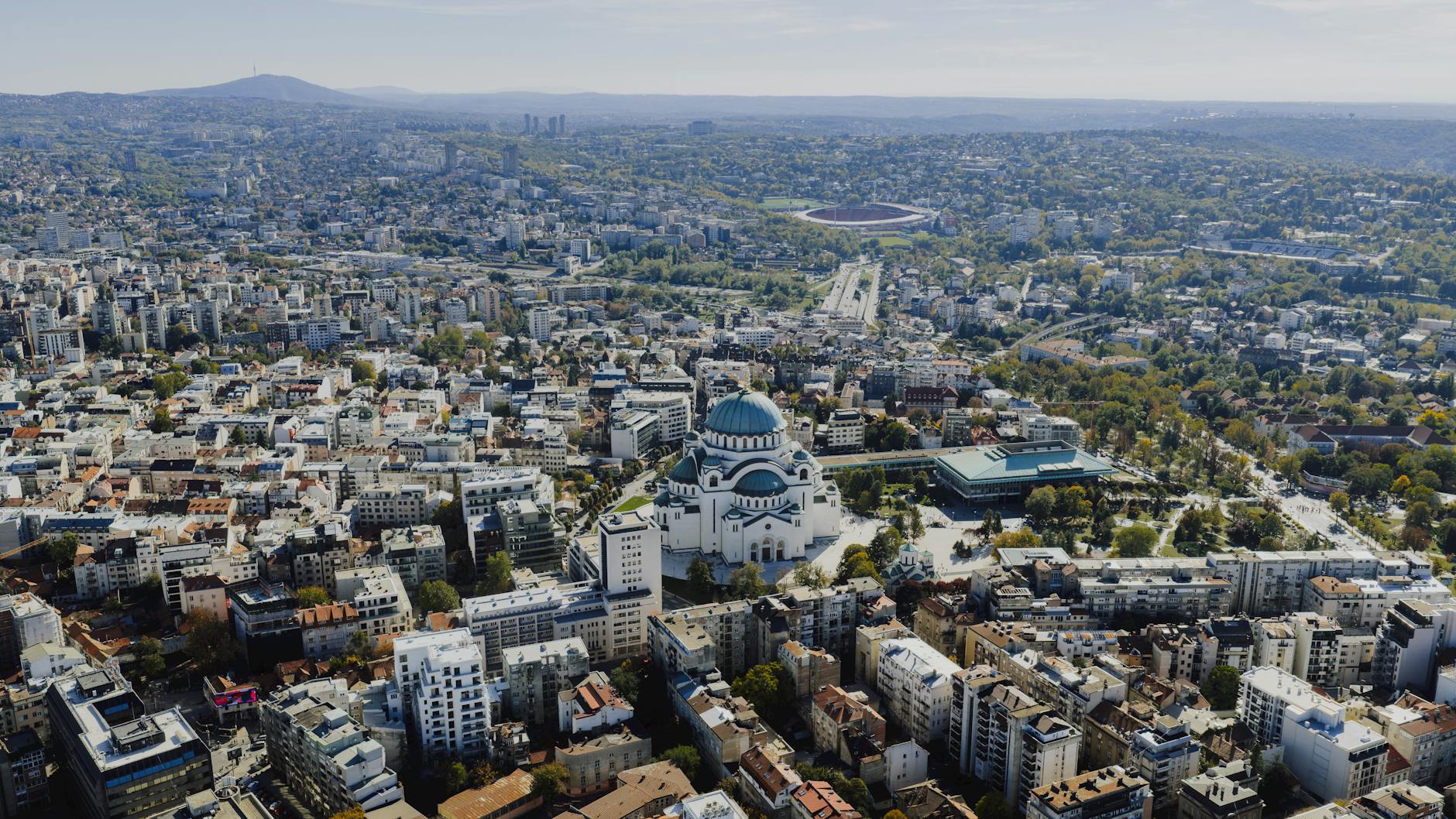
Belgrade’s landmarks do not interrupt daily routines; they exist within them. The Temple of Saint Sava is symbolically important, but it rises from a lived-in neighborhood rather than a ceremonial zone. Republic Square is a cultural reference point, a meeting place, and a transit hub at the same time. Ada Ciganlija functions as recreation, escape, and routine – a place people return to, not just visit once.
This integration makes the city feel continuous. Nothing is set aside solely for admiration. Everything is meant to be used.
Neighborhoods and Social Structure
Understanding Belgrade means understanding its neighborhoods. Dorćol carries an intellectual, slightly chaotic energy, shaped by history, culture, and a dense mix of old apartments, bars, galleries, and institutions. Vračar feels more controlled and residential, confident in its position and pace. Zemun, shaped by river proximity and a different historical legacy, moves slower and holds onto nostalgia more openly. New Belgrade is wide, functional, and often misunderstood – designed around movement, efficiency, and scale rather than intimacy.
Social structure in Belgrade relies heavily on relationships. Informal networks matter more than formal systems. Trust is built slowly, often over repeated coffee meetings. Conversations are direct and emotionally open. Disagreement is normal and rarely taken personally. Presence matters more than status.
Daily Rhythm and Transportation
Belgrade’s daily rhythm resists urgency. Mornings start slowly, anchored by coffee that functions as ritual rather than fuel. Lunch breaks stretch beyond their allocated time. Evenings begin late, and nights extend naturally rather than forcefully.
Public transportation is widely used and imperfect, but integrated into daily life. Walking remains essential, especially in central areas where the city reveals itself best at street level. Traffic can be loud and impatient, but it reflects the city’s energy rather than disrupting it.
Economy, Safety, and Order
Belgrade’s economy is transitional and visibly layered. New industries – tech, creative fields, hospitality, media — grow alongside older systems that still shape employment and opportunity. Economic inequality exists, but so does resilience. Adaptation is a learned skill here.
In terms of safety, Belgrade feels socially secure. Order is maintained more through familiarity and shared norms than visible enforcement. People look out for each other in quiet, practical ways. The city feels lived-in rather than controlled.
Food and Drinks: Central, Social, Uncomplicated
Food in Belgrade is treated seriously without being theatrical. Portions are generous, flavors direct, and traditions respected. Grilled meat holds cultural importance, but bakeries are just as essential. Seasonal produce matters. Meals are social by default.
Coffee defines the day. Rakija marks moments – greetings, celebrations, long conversations. Wine and beer follow mood rather than rules. Drinking is integrated, not staged.
Entertainment, Sports, and Music
Entertainment in Belgrade is diverse and decentralized. Nightlife exists across clubs, bars, river barges, and private spaces. It’s intense but rarely pretentious. Sports carry emotional weight, particularly basketball and football, shaping collective identity and conversation.
Music flows between genres without rigid boundaries – turbo-folk, electronic, jazz, rock, and underground scenes coexist and evolve quietly. Culture here is participatory rather than performative.
Belgrade as a Living City
Belgrade does not aim for easy admiration. It doesn’t flatten itself for clarity or comfort. It remains slightly unresolved, visibly layered, and unapologetically itself.
That resistance to simplification is exactly what gives the city its strength and why Belgrade stays with you long after you leave.
 Vistad Media