
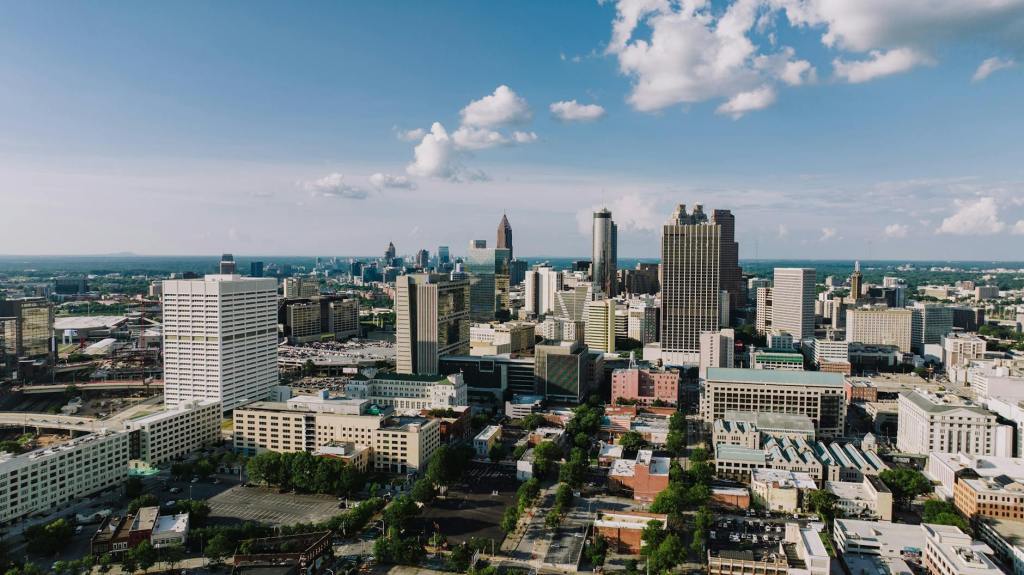
Every music genre has a city attached to it. Jazz has New Orleans. Grunge belongs to Seattle. Detroit shaped techno. Chicago transformed house music.
And trap music? That conversation starts and ends with Atlanta.
Not because other cities haven’t contributed to the genre. They absolutely have. But Atlanta turned trap from regional street music into a global sound that now dominates clubs, TikTok trends, luxury fashion campaigns, sports arenas, and practically every corner of modern hip-hop.
At this point, trap music isn’t even a subgenre anymore. It’s mainstream culture. And Atlanta built the blueprint.
Atlanta Was Already a Music City Before Trap Took Over
People sometimes talk about Atlanta’s trap scene as if it appeared out of nowhere in the early 2000s. It didn’t.
Atlanta had already been developing into one of America’s most important Black cultural capitals long before trap music exploded commercially. The city carried strong church music traditions, soul influences, Southern rap culture, and a growing entertainment industry that slowly gave artists more opportunities outside New York and Los Angeles.
During the 1990s, groups like OutKast and Goodie Mob helped redefine Southern hip-hop entirely.
At the time, Southern rap still wasn’t fully respected by parts of the music industry. New York was considered the center of lyrical rap culture, while Los Angeles dominated West Coast sound. The South often got treated like an outsider.
Then OutKast stepped onto the stage at the 1995 Source Awards and famously declared:
“The South got something to say.”
That line aged incredibly well because eventually, the South didn’t just “have something to say” – the South took over.
What Trap Music Actually Is
A lot of people use the word “trap” without really understanding where it came from. The term originally referred to “the trap” – slang for places connected to drug dealing and street survival. Early trap music reflected the realities of those environments. The lyrics focused on poverty, hustling, violence, ambition, paranoia, money, and escaping difficult circumstances.
But musically, trap also had a very specific sound. Heavy 808 bass. Fast hi-hats. Dark melodies. Minimalistic production. Atmospheric tension. The beats often felt cold and hypnotic at the same time. And Atlanta producers mastered that formula better than anyone.
Over time, trap evolved far beyond its original themes. Today, the sound exists in pop music, EDM, fashion campaigns, and even global advertising. But the roots remain deeply connected to Atlanta’s streets and culture.
T.I. Helped Define the Genre Publicly
There’s always debate around who “created” trap music. Music history is rarely that simple. But T.I. undeniably played a major role in turning the term into something commercially recognizable.
When he released Trap Muzik in 2003, the title itself pushed the genre identity into mainstream conversation. The album blended street storytelling with polished Southern production in a way that made trap accessible without completely losing authenticity.
Atlanta artists often balanced harsh realities with style, confidence, and ambition. Trap music was never only about struggle. It was also about survival turning into success and that duality became central to the genre.
Gucci Mane Changed the Entire Ecosystem
If T.I. helped commercialize trap, Gucci Mane helped build its DNA. Few artists influenced modern Atlanta rap culture more deeply.
Gucci’s music felt raw, prolific, chaotic, funny, threatening, charismatic, and oddly experimental all at once. He released mixtapes at an almost absurd pace, helping create Atlanta’s underground rap ecosystem long before streaming made constant music releases normal.
More importantly, Gucci Mane became a talent incubator. The list of artists connected to him is almost ridiculous: Young Thug, Future, Migos, 21 Savage, Chief Keef, Waka Flocka Flame.
The modern trap family tree keeps leading back to Gucci Mane in some way.
Even artists who sounded completely different still inherited parts of Atlanta’s trap infrastructure – the mixtape culture, the melodic experimentation, the street narratives, the independent hustle.
Atlanta rap scenes operated almost like interconnected neighborhoods. Everybody influenced everybody.
Future Made Trap Emotional
This might sound strange considering how emotionally detached some trap music appears on the surface. But Future changed the emotional texture of the genre.
Before Future, trap often leaned more aggressively street-oriented or club-focused. Future introduced something darker and more atmospheric. His music blurred confidence, exhaustion, paranoia, heartbreak, fame, and addiction into one hypnotic sound.
Albums like DS2 and Monster became hugely influential because they sounded emotionally numb in a way people connected with. That influence spread everywhere. Modern rap’s moody, melodic, emotionally conflicted sound owes a massive debt to Future and Atlanta. Even artists outside hip-hop started adopting similar production styles. At some point, trap stopped sounding regional. It started sounding global.
Young Thug Broke the Rules Completely
Atlanta’s music scene became truly unpredictable once Young Thug emerged. Trying to explain Young Thug’s influence to someone unfamiliar with modern rap is almost impossible.
His vocal style sounded unconventional to older listeners. Sometimes chaotic. Sometimes brilliant. Occasionally both within the same song.
Young Thug helped normalize experimentation inside mainstream trap music. Melodic flows became weirder. Fashion became less restricted by traditional masculinity. Rappers started treating vocals more like instruments than straightforward speech.
Without Young Thug, a large portion of modern melodic rap probably sounds very different. Atlanta artists often succeed because they’re willing to sound strange before the rest of the world catches up.
Migos Turned Atlanta Into Pop Culture
There was a point during the late 2010s where it felt impossible to escape Migos. And honestly, that’s not an exaggeration.
The trio helped popularize the rapid-fire “triplet flow” that became one of the defining sounds of modern rap. Their influence spread so aggressively that countless artists around the world started copying Atlanta flows almost immediately.
Songs like Bad and Boujee became cultural moments far beyond hip-hop audiences. Suddenly Atlanta slang, fashion, ad-libs, and trap aesthetics entered mainstream internet culture completely.
Luxury brands noticed. Sports culture noticed. Hollywood noticed. Trap music stopped feeling underground and it became global entertainment.
Atlanta’s Producers Deserve More Credit
Artists usually receive the spotlight, but Atlanta producers shaped the actual soundscape. Producers like Metro Boomin, Zaytoven, Southside, Mike WiLL Made-It, TM88, and Sonny Digital helped define modern trap production.
Metro Boomin especially became one of the most influential producers of the streaming era. His production feels cinematic – dark, polished, spacious, aggressive, but still melodic enough to crossover commercially.
Zaytoven brought church-inspired piano melodies into trap in a way that sounded unmistakably Southern.
And Atlanta’s production scene kept evolving faster than most cities could imitate it. That constant reinvention helped the city stay culturally dominant.
Trap Music Changed Fashion Too
Music scenes rarely stay limited to music. Atlanta trap culture deeply influenced streetwear, luxury fashion, sneaker culture, jewelry trends, and even social media aesthetics.
The rise of designer brands inside rap culture accelerated heavily through Atlanta artists. Brands like Gucci, Balenciaga, Rick Owens, Chrome Hearts, and Louis Vuitton became embedded inside modern trap identity.
At the same time, Atlanta never fully abandoned its Southern roots. There’s still a very specific confidence attached to Atlanta style from flashy jewelry to luxury cars and streetwear mixed with designer fashion.
A little bit excessive. Intentionally excessive. That visual culture became part of the genre itself.
Of Course, The Genre Has Critics
Trap music also receives criticism constantly. Some people argue the genre became repetitive. Others blame it for glorifying violence, materialism, drug culture, or emotional emptiness.
And honestly, some criticism isn’t entirely unfair. Certain parts of modern trap absolutely became commercialized to the point of parody.
But reducing the entire genre to stereotypes misses its cultural significance. Trap music documented environments mainstream America often ignored. It gave visibility to Southern artists long overlooked by the music industry.
And whether critics like it or not, trap became one of the defining sounds of the 21st century. Atlanta sits at the center of that story.
 Vistad Media